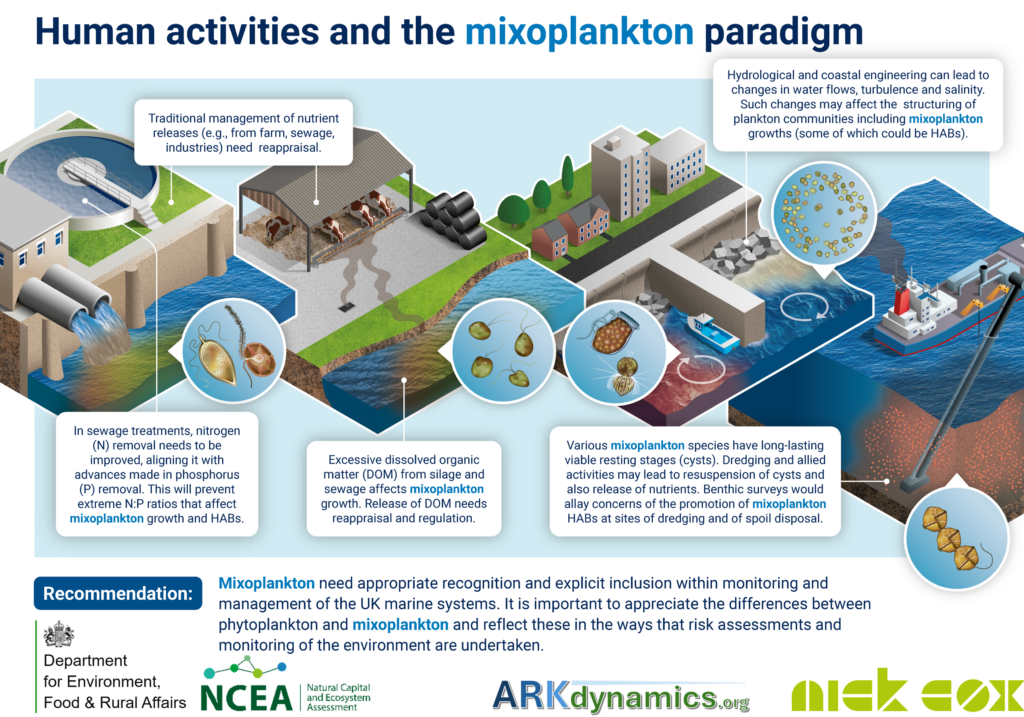
Plankton form the foundation of aquatic food webs, driving primary production, carbon sequestration and supporting fisheries on a global scale. Over the last decade, our research has led to the emergence of a new paradigm in marine ecology – the mixoplankton paradigm. Mixoplankton are single-celled organisms that photosynthesize and consume prey in the single cell. The mixoplankton paradigm overturns the traditional plant-animal based aquatic food web structure which forms the bedrock of aquatic ecology, oceanography, and modelling there of. For more information on mixoplankton and the new paradigm, please visit www.mixotroph.org.
Depending on environmental conditions, the biodiversity within plankton communities either support aquatic food-webs or disrupt these, for example through development of Harmful Algal Blooms (HABs). HABs can lead to further environmental damage such as deoxygenation and death of fish. Understanding how aquatic food webs function, the dynamics of HABs, and their interactions with changing abiotic conditions (weather, climate, eutrophication) is challenging.
To understand the dynamics of aquatic ecology requires development and deployment of simulation models that provide appropriate, robust and faithful descriptions of plankton types. Simulation models currently used in climate change predictions, biodiversity studies and fisheries management do not incorporate the required physiological and ecological interactivity that promotes a strong appreciation of these dynamics. Neither do they include mixoplankton.
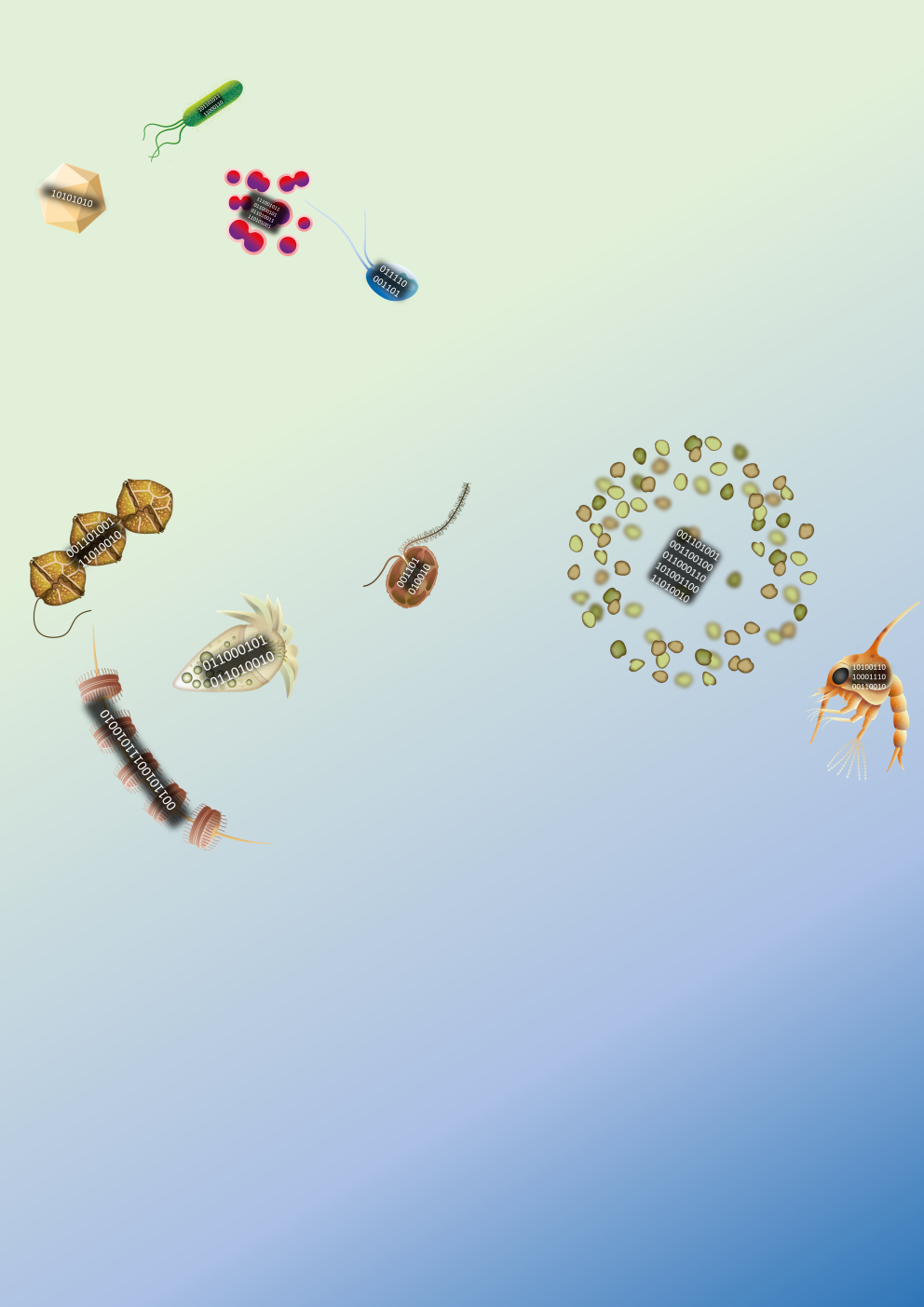
We have unique expertise, backed by 50 person years of research, in development and deployment of system dynamics cybernetic plankton models, from viruses, bacteria, phytoplankton, mixoplankton, protist zooplankton through to metazoan zooplankton.
As key drivers in the mixoplankton paradigm, our models are also the only ones that provide descriptions across the breadth of mixoplankton functional types. All our simulation models are supported by extensive expertise in empirical plankton research.
In addition to research papers and book chapters, our products include manuals and guides for plankton field and laboratory work, developed reports and digital twins .